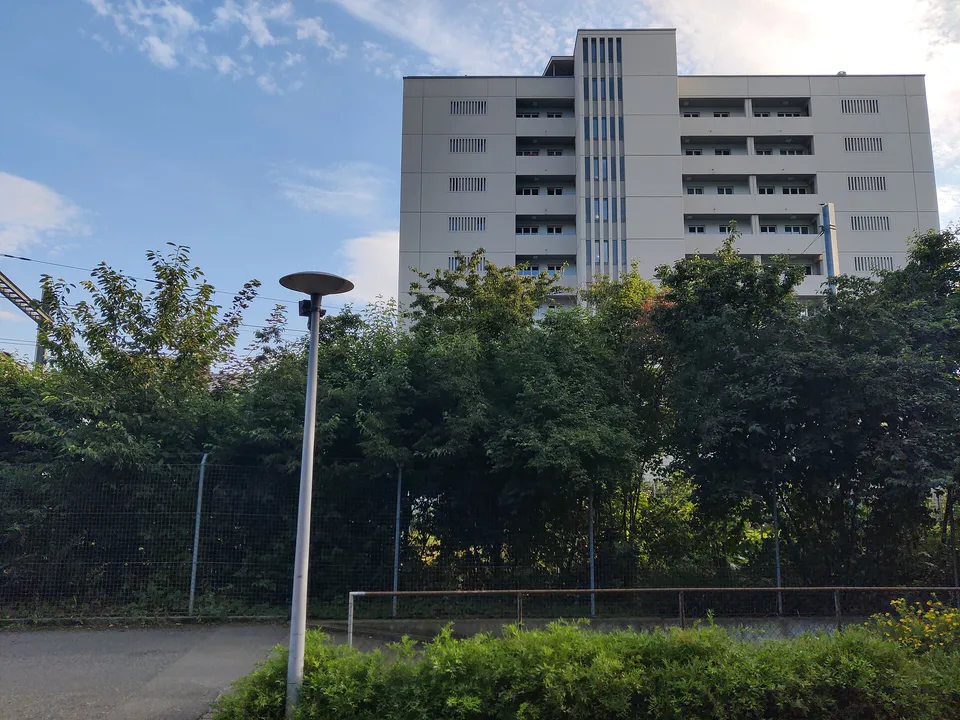
Switzerland has one of Europe's most closely watched property markets.
Housing is expensive, available land is limited in many desirable areas and demand remains strong in major economic centres.
This creates an interesting question.
Why can Swiss residential property prices continue rising even when economic growth becomes less impressive?
The answer lies in a combination of supply, demographics, financing and Switzerland's unique geography.
Switzerland cannot simply build everywhere
The first factor is physical.
Switzerland has limited usable land.
Mountains, lakes, agricultural areas and planning restrictions reduce the amount of land available for large-scale residential development.
At the same time, cities such as Zurich, Geneva, Basel and Lausanne continue attracting workers and businesses.
When demand increases faster than housing supply, prices can face upward pressure.
This dynamic can continue even during periods when the wider economy is growing slowly.
Population matters
Housing demand ultimately depends on people.
Switzerland has experienced population growth supported partly by international migration.
A strong labour market and high living standards continue to attract workers.
More residents require more homes.
But housing supply cannot always adjust quickly.
Building projects take time.
Planning rules can delay construction.
Available land in highly desirable locations is scarce.
The result can be persistent pressure on both property prices and rents.
Interest rates change affordability
Financing conditions represent another major factor.
Most property buyers do not purchase homes entirely with cash.
They use mortgages.
Interest rates therefore influence how expensive it is to finance a property.
When borrowing costs fall, monthly financing expenses can become more manageable for some buyers.
That can support demand.
When rates rise, affordability can deteriorate.
Switzerland's low-rate environment has therefore played an important role in property-market discussions.
But rates are not the only factor.
Even expensive financing may not immediately reduce prices if housing supply remains extremely limited.
Property and the Swiss franc are connected
Swiss real estate is primarily a domestic market.
But it exists inside a broader financial system.
Interest-rate expectations influence CHF.
The franc can affect inflation.
Inflation influences monetary policy.
Monetary policy affects mortgage conditions.
The housing market therefore sits inside the same network of economic relationships that influences currencies and equities.
This is why traders and investors often monitor economic indicators beyond the asset they are directly following.
Market participants using Novara can access forex, indices, commodities and equities through CFDs, allowing them to observe how changes in Swiss or global economic expectations affect different financial markets.
Why a slowdown does not automatically mean falling prices
A common assumption is that weaker economic growth should immediately reduce property prices.
Markets rarely work so simply.
If unemployment remains relatively low, population continues increasing and housing construction remains constrained, demand may continue exceeding supply.
Real estate also adjusts slowly compared with financial markets.
A currency can move several percentage points within hours.
Building thousands of new homes can take years.
This difference in speed matters.
Housing can create financial risks
Persistently rising property prices are not automatically positive.
If prices increase significantly faster than household incomes, affordability can deteriorate.
Higher mortgage debt can also increase vulnerability to future interest-rate changes.
Banks, regulators and central banks therefore monitor housing markets closely.
The issue is not simply whether prices are rising.
It is whether debt, valuations and household finances remain sustainable.
Switzerland's housing paradox
Switzerland combines high incomes, strong institutions and attractive cities with severe constraints on housing supply.
That makes residential property one of the country's most interesting economic stories.
A slower economy can reduce demand.
Higher rates can change affordability.
But neither necessarily creates new land or additional homes overnight.
Novara Markets provides CFD access to global financial markets including forex, commodities, indices and equities. While direct Swiss residential property is a different asset class, the economic forces surrounding housing — interest rates, inflation and growth — also influence the markets traders follow every day.
Swiss property prices are ultimately shaped by economics.
But geography plays a role that monetary policy cannot easily change.