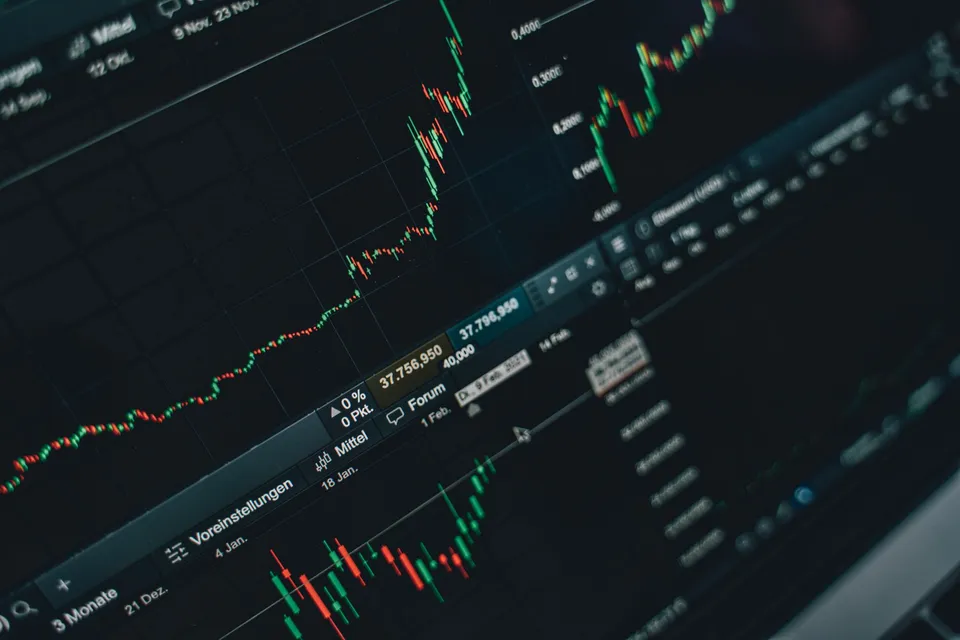
CFDs are widely used to access financial markets, but one part of their structure deserves particular attention.
Leverage.
It can reduce the amount of capital required to open a position relative to its total market exposure.
It can also magnify losses when the market moves in the opposite direction.
Understanding what happens when a CFD position goes against you is therefore fundamental before thinking about potential returns.
What is a CFD?
CFD stands for Contract for Difference.
Instead of purchasing the underlying asset, two parties exchange the difference between the price when a position is opened and the price when it is closed.
This means traders can gain exposure to markets such as forex, commodities, indices or equities without owning the underlying instrument.
CFDs can also allow positions to be opened in either direction.
A trader can take a position based on an expectation that a market will rise or that it will fall.
But direction is only one part of the equation.
Leverage changes the mathematics
Suppose a trader wants exposure to a market position worth $10,000.
With a leveraged product, the capital required to open that position may represent only a fraction of the total exposure.
This is known as margin.
The important detail is that profit and loss calculations relate to the market exposure, not simply the initial margin.
That means relatively small price movements can have a much larger impact on the capital committed to the trade.
Leverage does not make the market move more.
It increases the financial effect of that movement on the position.
What happens when the price moves against you?
Imagine a trader opens a long CFD position because they expect an index to rise.
Instead, the index falls.
As the market moves lower, the value of the position decreases.
If losses become sufficiently large relative to the available funds in the trading account, additional margin requirements or automatic position closures may occur depending on the platform's rules and applicable protections.
The exact mechanisms can vary.
This is why understanding margin requirements before entering a position is essential.
Going short does not remove risk
One feature that attracts attention to CFDs is the ability to take short positions.
A trader expecting an asset to decline can potentially position for that scenario.
But short positions carry risk too.
If the market rises instead, the position loses value.
Markets can also move sharply after unexpected news, economic data or corporate announcements.
Being able to trade in both directions should never be confused with being protected from losses.
Volatility and leverage can be a difficult combination
Market volatility can increase around events such as inflation reports, central-bank decisions, employment data, earnings announcements or geopolitical developments.
Prices can move quickly.
Under leveraged conditions, those movements can have a substantial effect on a position.
For this reason, traders often consider factors such as position size, available margin, stop-loss levels and overall portfolio exposure.
Platforms such as Novara provide access to different markets through CFDs, including forex, commodities, indices and equities.
But access to multiple markets does not change the fundamental mechanics of leverage.
Risk management starts before the trade
Risk management is sometimes treated as something traders think about after opening a position.
It should happen before.
How much market exposure does the position represent?
How volatile is the instrument?
What economic events are approaching?
How much of the account is exposed?
What happens if the original market thesis is wrong?
These questions are not as exciting as predicting market direction.
They may be considerably more important.
CFDs are tools, not predictions
A CFD is ultimately a financial instrument.
It does not determine whether a trade succeeds.
It provides a way to gain exposure to changes in the price of an underlying market.
The result depends on market direction, position size, leverage, costs, timing and risk management.
Novara Markets offers access to global financial markets through CFDs across forex, commodities, indices and equities. Traders considering leveraged products should understand how margin and volatility can affect both potential profits and potential losses. CFDs are complex instruments and come with a high risk of losing money rapidly due to leverage.
Markets will sometimes move in the expected direction.
Sometimes they will not.
Understanding what happens in the second scenario is one of the most important parts of trading.