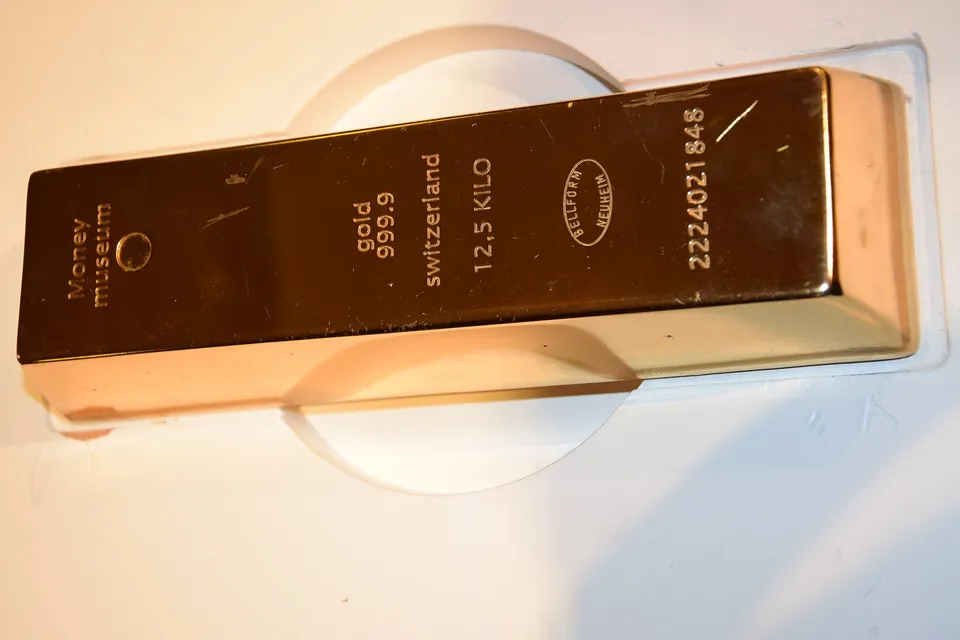
Few assets have followed human civilisation as closely as gold.
Currencies have disappeared. Governments have changed. Financial systems have evolved dramatically.
Gold remains.
Today, it is traded globally and monitored by central banks, institutional investors and individual market participants. But its importance becomes particularly visible whenever uncertainty enters financial markets.
Why does an ancient metal continue to attract so much attention?
Gold is more than a commodity
Unlike oil, copper or wheat, gold is not valued primarily because industries need to consume it.
It occupies an unusual position between commodity, financial asset and store of value.
This distinction helps explain why its price can respond strongly to factors that appear unrelated to physical supply and demand.
Interest rates, inflation expectations, the US dollar, geopolitical tensions and investor sentiment can all influence gold.
Understanding gold therefore requires looking beyond the metal itself.
What happens when uncertainty rises?
During periods of financial or geopolitical instability, investors often reconsider how much risk they are willing to hold.
Money can move between equities, government bonds, currencies, cash and precious metals as expectations change.
Gold has historically been one of the assets investors examine during these moments.
That does not mean gold automatically rises whenever there is a crisis.
Markets are more complicated.
If investors suddenly need liquidity, for example, assets can behave differently from their traditional patterns. Expectations about interest rates and the dollar can also outweigh geopolitical concerns.
Context matters.
Interest rates can change the equation
Gold does not generate interest.
That makes the interest-rate environment particularly relevant.
When yields available from bonds or cash become more attractive, holding an asset that generates no income may become relatively less appealing.
When expectations shift toward lower interest rates, that relationship can change.
This is why speeches from central bankers in Washington, Frankfurt or elsewhere can influence the gold market even when they say nothing about gold itself.
Never ignore the dollar
Gold is internationally priced primarily in US dollars.
As a result, movements in the dollar can influence how expensive gold becomes for buyers using other currencies.
A stronger dollar can create pressure on gold under certain circumstances, while a weaker dollar can provide support.
Again, this is not a mechanical rule.
Financial markets rarely follow a single variable.
The more useful approach is to observe several factors simultaneously: dollar strength, real yields, inflation expectations, geopolitical risk and overall market sentiment.
This multi-market perspective is increasingly important for traders using platforms such as Novara, where CFDs provide exposure to commodities alongside forex, indices and equities.
A movement in gold may make much more sense when viewed together with currencies and interest-rate expectations.
Volatility creates opportunity — and risk
Gold's defensive reputation can sometimes create the impression that it is inherently safe.
Price stability and asset reputation are not the same thing.
Gold can experience substantial short-term volatility, particularly around economic data, central-bank announcements or major geopolitical developments.
For traders using leveraged products such as CFDs, those movements can magnify both gains and losses.
Risk management therefore remains fundamental.
An old asset in a modern market
Perhaps the most interesting thing about gold is how successfully it has adapted to modern finance.
It can respond within seconds to inflation data released in the United States, political developments in Europe or geopolitical events in the Middle East.
A metal valued for thousands of years now trades inside a financial system operating virtually around the clock.
Platforms such as Novara Markets provide CFD access to commodities including gold alongside other global asset classes, allowing market participants to observe these relationships from one trading environment. CFDs are complex instruments and come with a high risk of losing money rapidly due to leverage.
But technology does not remove uncertainty.
Understanding why markets move remains more important than simply having access to them.
And when uncertainty increases, gold continues to be one of the first places global markets look.