Interest rates can appear abstract.
A central bank changes a number by a fraction of a percentage point, financial headlines react immediately and markets begin moving.
But interest rates eventually reach almost everyone.
They can influence mortgages, savings, currencies, corporate financing and investment decisions.
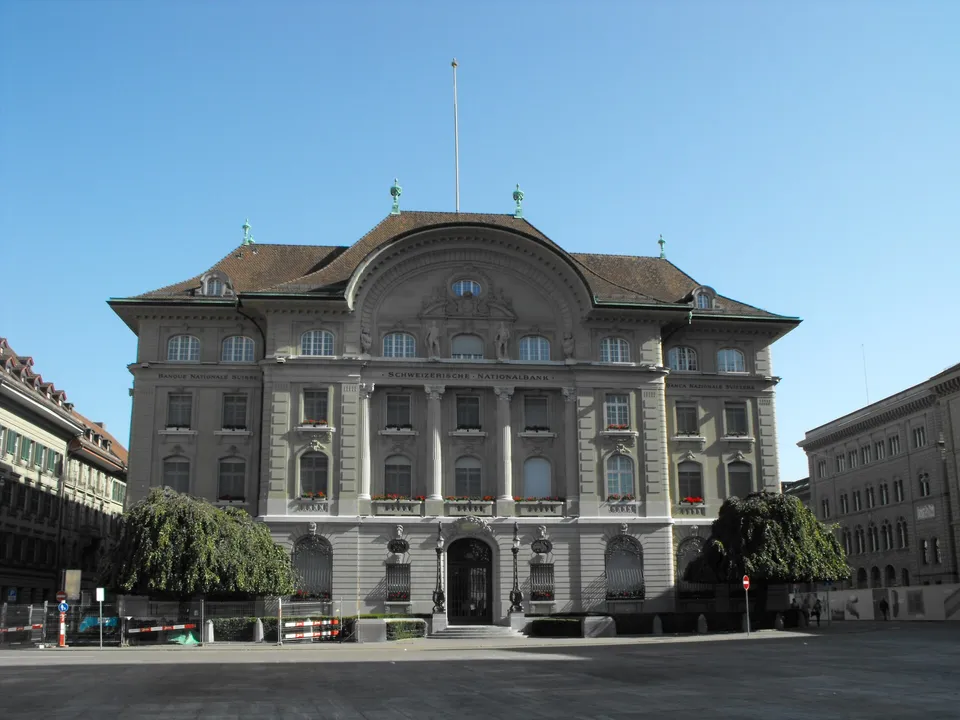
In Switzerland, the subject has become particularly important as the Swiss National Bank has maintained its policy rate at 0%.
What does that actually mean for the Swiss economy — and for your money?
Why central banks change interest rates
Central banks use interest rates primarily to influence economic conditions and maintain price stability.
When inflation becomes too strong, higher rates can make borrowing more expensive and encourage saving, potentially reducing demand.
When economic activity is weak or inflation becomes too low, lower rates can make financing cheaper and encourage spending and investment.
Switzerland presents a particularly interesting case because inflation has historically behaved differently from many other major economies.
The Swiss franc also plays an important role.
What 0% actually means
A policy rate of 0% does not mean every Swiss resident can borrow money for free.
The SNB policy rate acts as a reference point for financial conditions.
Commercial banks still determine lending rates based on credit risk, funding costs, market conditions and other factors.
Nevertheless, the central-bank rate can influence borrowing costs throughout the economy.
Mortgages are one obvious example.
Changes in interest-rate expectations can affect financing conditions for households and property buyers.
Companies are affected too.
Cheaper financing can make certain investments more attractive, while higher borrowing costs can encourage businesses to postpone expansion.
What about savings?
Low interest rates create another question.
What happens to cash sitting in a bank account?
When deposit rates are low, the return generated by savings can become limited.
Inflation also matters.
If prices increase faster than the interest earned on cash, purchasing power can gradually decline even if the nominal balance remains unchanged.
This does not automatically mean people should take more investment risk.
Cash serves important purposes including liquidity and financial security.
But low rates can influence how investors think about the balance between cash, bonds, equities and other assets.
The Swiss franc complicates everything
Switzerland cannot think about interest rates without considering CHF.
Higher Swiss rates can potentially increase the relative attractiveness of franc-denominated assets.
Lower rates can have the opposite effect.
But currencies respond to many variables simultaneously.
Global risk sentiment, ECB policy, Federal Reserve decisions and geopolitical uncertainty can all influence the Swiss franc.
This is why SNB decisions attract attention far beyond Switzerland.
A monetary-policy announcement in Zurich can quickly affect forex markets.
From rates to financial markets
Interest rates can also influence equities and commodities.
Companies frequently rely on financing.
When borrowing becomes cheaper or more expensive, expectations about future corporate profits can change.
Gold can react to changes in global interest-rate expectations.
Currencies respond to differences between monetary policies.
Property markets can respond to financing costs.
The result is a network of relationships rather than a single cause-and-effect mechanism.
For traders using platforms such as Novara, where forex, commodities, indices and equities can be accessed through CFDs, understanding interest rates provides context for movements across several markets.
Zero does not mean nothing is happening
A central bank leaving rates unchanged can itself be important.
Markets continuously estimate what policymakers will do next.
If traders expected a rate cut and the SNB leaves rates unchanged, currencies and other assets may react even though the official rate did not move.
Expectations are what matter.
This is why monetary-policy statements can sometimes move markets as much as the decision itself.
Switzerland's unusual monetary position
Switzerland's combination of low inflation, a strong currency and globally important financial markets makes its monetary policy particularly interesting.
For households, interest rates can influence savings and borrowing.
For companies, they affect financing.
For traders, they can change expectations across currencies and other asset classes.
Novara Markets provides CFD access to global markets including forex, commodities, indices and equities, giving market participants the ability to observe how monetary-policy expectations can spread across markets.
Interest rates may be expressed as a simple percentage.
Their effects reach almost everywhere.