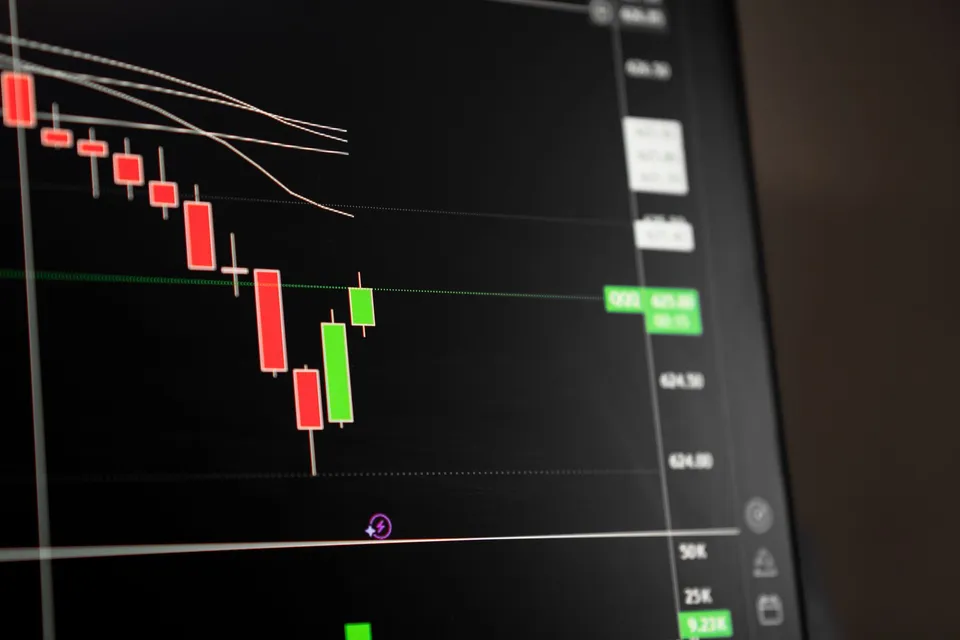
Fears regarding interest rates and artificial intelligence eased noticeably across the German stock market ahead of the weekend. The Dax advanced by 0.95 percent on Friday to settle at 25,622.61 points, extending its weekly gain to a solid two percent. Furthermore, the benchmark index moved past the 100-day moving average, a technical indicator for medium- to long-term trends that had posed too high a hurdle during previous sessions. The MDax index of mid-cap companies rose by 1.46 percent to 30,656.65 points.
Earlier in the week, unexpectedly high inflation readings in the United States had stoked worries that the Federal Reserve might implement another benchmark interest rate increase as early as October, thereby making financing more expensive. Additional anxieties stemmed from investor concerns that massive capital expenditures by artificial intelligence giants might ultimately fail to yield returns. However, comments from Federal Reserve head Kevin Warsh during a speech omitted specific monetary policy guidance, significantly reducing market probabilities of an October rate hike. Regarding artificial intelligence, he stated that investments in the sector heavily support the United States economy. Thomas Altmann of asset manager QC Partners noted that Warsh restored optimism to the exchanges.
Market analyst Timo Emden from broker Captrader questioned whether this rhetorical tailwind would form a sustainable framework for a year-end rally, pointing out that current market volatility highlights an opaque environment where participants lack a clear guiding thread amid rate questions, artificial intelligence doubts, and global crises. Sören Hettler of DZ Bank viewed the recent correction in semiconductor and specific artificial intelligence equities as merely a selective revaluation by investors rather than a broad departure from the theme. Highly valued and heavily debt-financed parts of the ecosystem face pressure, whereas companies exhibiting high profitability across other sectors and robust cash flows remain far less vulnerable to rising borrowing costs. The upcoming third-quarter reporting season represents the next strict test.
The Eurozone benchmark EuroStoxx 50 increased by 0.58 percent to 6,204.23 points on Friday. Outside the Eurozone, the Swiss SMI and British FTSE 100 also recorded modest gains. On Wall Street, the Dow Jones Industrial rose by slightly more than 0.2 percent around European closing times, while the technology-heavy Nasdaq 100 declined by approximately 1.3 percent.
Within the German market, defense equities continued their recovery attempt. Rheinmetall led the Dax with a 6.3 percent increase, while MDax participants TKMS, Renk, and Hensoldt gained between 4.4 percent and 6.0 percent. Shares of space and technology group OHB climbed 13 percent inside the SDax small-cap index.
The automotive sector also rebounded. Volkswagen, Mercedes-Benz, and BMW occupied top positions in the Dax with advances ranging from 2.8 percent to 3.5 percent. Traditional industrial sectors generally saw strong demand following previous technology weakness, aided additionally by an agreement between Germany and France on a joint automotive package.
Chip industry equipment supplier Aixtron surpassed analyst estimates for both third-quarter incoming orders and operational profitability. Its shares recovered 6.2 percent, recouping a portion of the nearly 13 percent loss sustained previously due to negative technology sentiment. Nordex led the MDax with a 12.3 percent surge after the wind turbine manufacturer presented stronger-than-expected third-quarter figures and an upgraded profit outlook.
At the peak of the SDax, Verbio shares jumped 16.6 percent to 29.84 euros. Constantin Hesse from analysis firm Jefferies upgraded the biofuels producer to Buy and raised the price target to 42 euros.