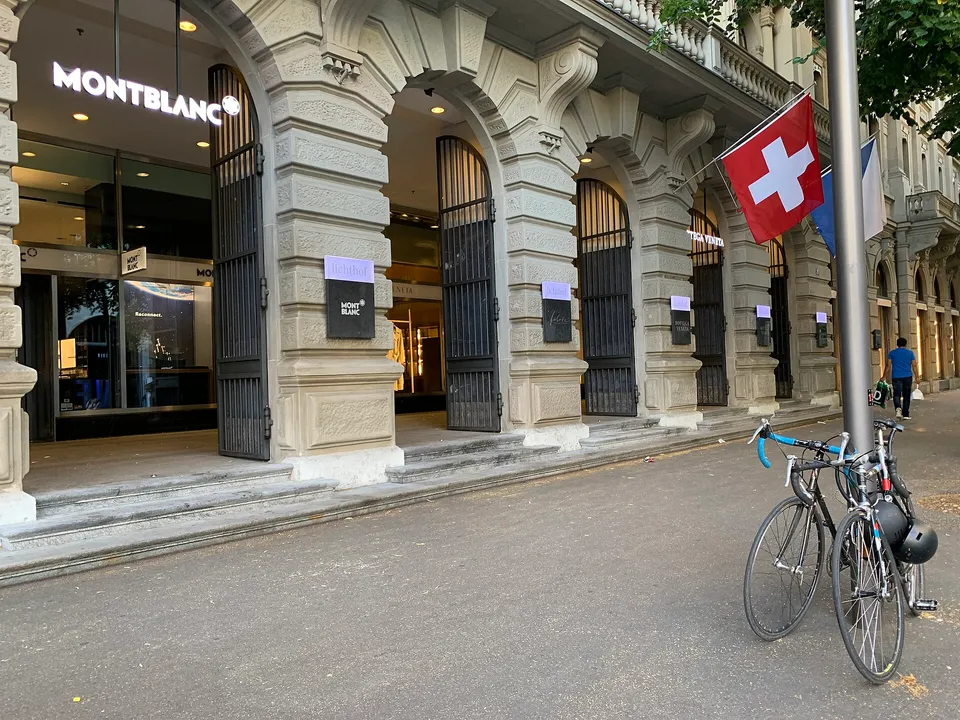
Within a short period, two banks announced they are leaving the city of Zurich: Cembra and Vontobel. As a result, the city loses around 1,850 jobs. Political parties including FDP, The Centre, and SVP have raised alarms that Zurich is losing its connection as a business location, whereas the city government maintains that Zurich does not have a fundamental location problem. Criticism of the administration has persisted since the announcements, amplified by the fact that the canton of Zurich ranks last among all cantons in corporate taxation, fueling fears of a negative spiral. Real estate expert Daniel Stocker of Jones Lang LaSalle stated in an interview earlier in the week that he expects further departures.
By contrast, 63-year-old economist Mathias Binswanger views the situation much more calmly. Binswanger, a professor of economics at the University of Applied Sciences Northwestern Switzerland in Olten, stated that the departure of banks from Zurich is not bad news, noting that frequent complaints about centralization where everything clusters in major centers while the periphery loses make such shifts welcome. While industrial companies relocated away from centers in the past, service providers like the two banks are now moving as well, with Cembra relocating to Baden in the canton of Aargau and Vontobel moving to Baar in the canton of Zug. Binswanger pointed out that traditional customer business and bank counters have significantly decreased in importance, making a direct presence near clients in major centers less crucial for companies.
According to Binswanger, the departures offer an additional advantage by easing the enormous pressure on real estate prices in Zurich. Currently, Zurich counts 126 jobs for every 100 city residents, generating a large excess demand for housing that drives rents upward. If Zurich were to invest heavily in location attractiveness as demanded by bourgeois politicians, the pressure on the housing market would be fueled further, which likely explains the city government's restraint. Furthermore, despite the departure of numerous firms, tax revenues continue to flow strongly thanks to flourishing large corporations.
Companies in Zurich also hit growth limits when they wish to expand significantly or bring employees together at a large site, as occurred with Vontobel. Binswanger noted that taxes are not the sole decisive factor in location selection, as residential attractiveness also matters, and highlighted that top management's personal tax burden plays an even larger role than corporate taxation. Furthermore, corporate relocations demonstrate that Swiss location competition functions effectively, with the Zurich government currently appearing unconcerned, though Binswanger noted that if too many companies were to leave eventually, that stance would likely change quickly.