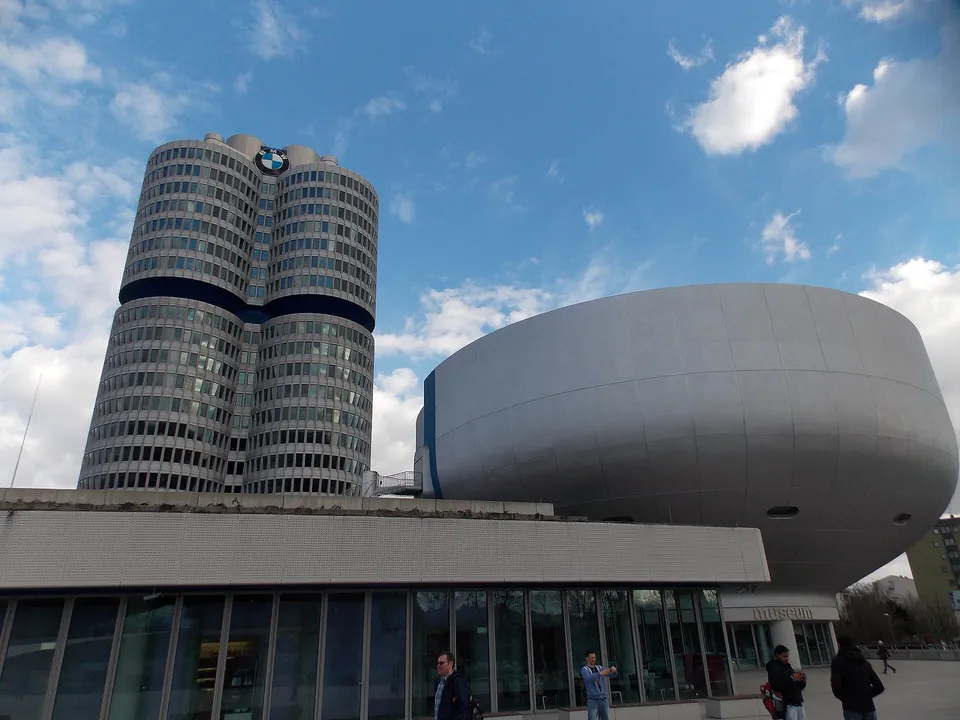
Automakers BMW and Volkswagen have initiated comprehensive restructurings of their respective groups with the objective of securing long-term profitability improvements. Both companies are implementing workforce reductions and addressing internal and product complexity, though distinct differences emerge in their approaches and execution across coming years.
Financial performance for both manufacturers presents challenges, with lowered forecasts issued for 2026. BMW anticipates returns of one to three percent, while Volkswagen expects roughly one percent. The primary driver behind these difficulties is the collapsing market in China, where vehicle sales have contracted by a fifth with no rapid recovery expected. This situation has been intensified by rising fuel prices following the outbreak of the Iran war, which disrupted the previously stable combustion-engine business in China.
Looking ahead, both groups target higher returns. Volkswagen Chief Executive Oliver Blume aims for a nine percent return by the end of the decade, whereas BMW anticipates a return to its long-standing target corridor of eight to ten percent by the early 2030s, accompanied by an interim goal of three to five percent for 2028.
To drive profitability gains, BMW is executing a savings program involving the elimination of 8,000 jobs, representing approximately five percent of its global workforce. Administration and development are the most heavily impacted areas, with severance and early retirement offers directed at employees in those departments following agreements with the works council. Management positions are also targeted, with one in five roles set to be cut and the corresponding areas dissolved over coming years. Production plants are explicitly excluded from these measures, as factories in the United States and Europe operate at high utilization rates while excess capacity remains concentrated in China. According to Board Member Milan Nedeljkovic, the objective is to accelerate operations and foster greater entrepreneurial spirit, encouraging employees to assume broader responsibility.
Volkswagen's planned cutbacks are substantially larger. In addition to a previously agreed reduction of 50,000 positions, the company intends to eliminate another 50,000 jobs by 2030, with roughly half potentially affecting Germany. This totals 15 percent of all jobs. Tens of additional positions remain under review as Blume plans to phase out production at four German plants starting in 2031. Implementation details and exact job losses remain undetermined at Volkswagen, and compulsory redundancies are largely ruled out due to employment security provisions extending to 2030 for the core VW brand. Negotiations with labor representatives are expected to be protracted and contentious, initiated by management through the cancellation of various collective agreements.
Both Blume and Nedeljkovic are addressing operational and product complexity. Volkswagen plans to discontinue half of its roughly 150 different models, affecting vehicles such as the ID.5 electric coupe, which will not receive a successor, the limousine version of the Passat, and the low-margin Spanish brand Seat, which currently lacks an electric vehicle and is not expected to receive one. The number of steering wheel variants will be reduced, and vehicles will share a greater proportion of internal components, following the Core brand group's approach with the electric Polo. That vehicle shares technical foundations with sister models including the ID.Cross, Cupra Raval, and Skoda Epiq, generating 600 million euros in savings.
BMW is similarly streamlining its portfolio by phasing out unprofitable models without successors, such as the 2 Active Tourer and the Z4 roadster, while the new 3 Series will no longer offer a diesel engine. Concurrently, the Munich-based manufacturer announced two new models: a large SUV in the United States positioned above the X7, and a compact electric car for Europe. This creates a more regionalized offering intended to benefit BMW in the challenged Chinese market, where 95 percent of sold BMW vehicles are targeted to be locally produced by 2030.
Technology strategies also reveal divergences. BMW developed the Neue Klasse, a proprietary software-defined vehicle featuring an operating system and central computers. The subsequent phase involves the AI-defined vehicle, which prioritizes the intuitive interaction of various vehicle components, from driver assistance systems to infotainment and basic functions, rather than standalone features. Bernstein analyst Stephen Reitman noted that BMW recognizes the solution extends beyond mere cost-cutting and includes pursuing growth through innovative products, identifying the Neue Klasse as core to the recovery.
Conversely, Volkswagen partnered with Rivian in the United States for its software-defined vehicle development, though vehicles from this collaboration are years away from reaching the market. For the Chinese market, Volkswagen cooperates with Xpeng.