The German federal government has prohibited the Chinese state-owned shipping company Cosco from taking over the German logistics enterprise Zippel. The decision was announced by the Federal Ministry for Economic Affairs on Wednesday morning, with officials pointing to security concerns as the primary reason for the prohibition. According to the government's assessment, the proposed transaction would have deepened existing dependencies and posed a threat to the stability of supply chains in both Germany and the wider European Union. While the ministry noted that Europe's largest economy welcomes foreign investment, it maintained that certain transactions can present risks to national security. The authority stated it would issue a formal prohibition notice.
Zippel handles the transportation of containers and general cargo, including items such as pallets, machinery, and furniture, moving goods from the major sea ports of Hamburg and Bremerhaven to industrial and trade centers across eastern Germany as well as neighboring European countries. Hamburg and Bremerhaven rank as Germany's most important sea ports measured by cargo volume. Zippel employs 350 people. Reports from the Handelsblatt indicate that the logistics operator holds a market share ranging from 35 to 90 percent at terminals located in Berlin, Schkopau in Saxony-Anhalt, and Elsterwerda in Brandenburg.
Cosco had planned to acquire an 80 percent stake in the firm. Managing director Axel Plass intended to retain a 20 percent share and remain at the helm of the business. Plass stated that he acknowledges the government's decision, adding that management would have preferred a different outcome and still considers their entrepreneurial decision correct. Daily operations will continue unchanged, and no alterations will occur for customers or employees. Cosco did not immediately provide a statement.
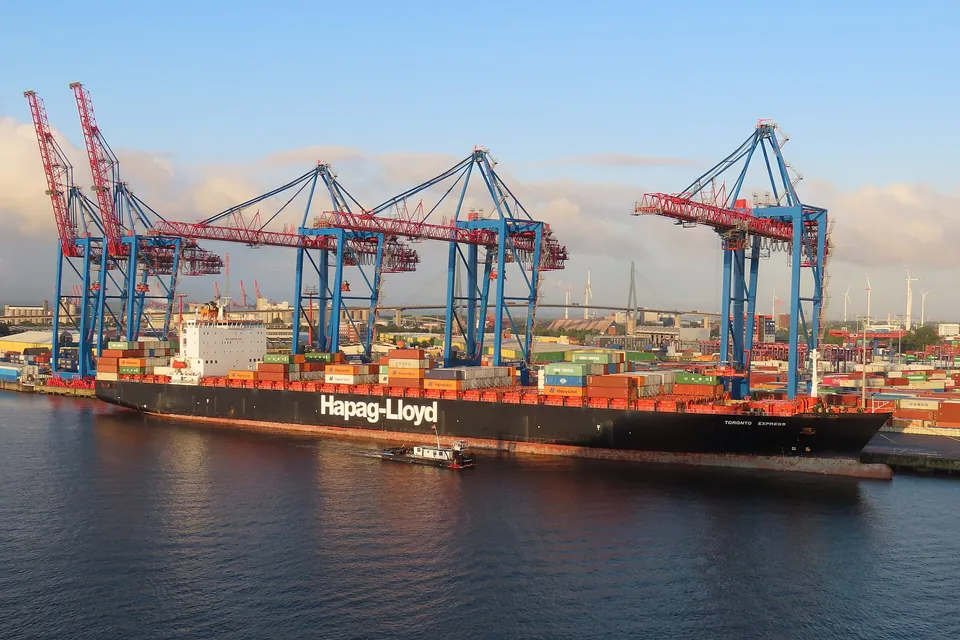
Ranking among the world's largest liner shipping companies, Cosco regularly calls at German ports and holds the fourth position globally by transport volume, placing it ahead of Germany's largest shipping line, Hapag-Lloyd. The Chinese company already holds a 24.99 percent stake in the Tollerort container terminal in Hamburg, following a cabinet decision in 2022 that permitted a minority acquisition below 25 percent after considerable political debate. That agreement was signed in June 2023. Cosco also maintains terminal stakes in other European nations, including Greece, Spain, and Belgium, with the Piraeus port serving as a distribution hub for Central and Eastern Europe.
Plans regarding the sale of Zippel to Cosco first emerged late last year after business partners sought to withdraw from the company, a circumstance confirmed by Plass. In February, the Federal Cartel Office cleared the transaction from a competition perspective, noting that safety policy aspects were not examined as Zippel moves only a small fraction of cargo in Hamburg and Bremerhaven. However, opposition arose in late April when reports indicated that the Federal Office for the Protection of the Constitution had raised objections in writing, expressing worry over cumulative acquisition projects by the Chinese state conglomerate within Germany and the European Union.
The Ministry for Economic Affairs subsequently reviewed the transaction under provisions allowing the government to examine deals that might threaten public order or security. The ministry reviews approximately 300 cases annually on average, prohibiting acquisitions in eight instances. Throughout the review, Plass defended the proposed transaction, emphasizing that the business would remain in Hamburg, jobs would be secured, and the objective was to capture and retain cargo volume.